Author: Buragadda Srinadh

  • Tribute to Dr.B.R.Ambedkar

    A tribute to one of the greatest minds and nation-builders India has ever produced—Dr. Bhimrao Ramji Ambedkar. A jurist, economist, social reformer, and above all, a tireless champion of justice and equality.

    While we rightly celebrate him as the Father of the Indian Constitution, one cannot help but wonder: What if Dr. Ambedkar had been appointed India’s first Education Minister by Nehru? The destiny of India’s youth might have been profoundly different—right from the very beginning.

    Pandit Nehru’s Decision: A Historical Wrong

    History often glorifies leaders for what they did. But it must also confront what they failed to do.

    One such failure was Pandit Jawaharlal Nehru’s decision not to appoint Dr. B.R. Ambedkar as India’s first Education Minister. In overlooking a man who understood the grassroots crisis of illiteracy, who personally endured the brutalities of social exclusion, and who symbolized the transformative power of education, India lost a rare opportunity to build an inclusive, empowering education system from day one.

    Instead of entrusting the education portfolio to one of the most educated and visionary minds of the time, the reins were handed to others who, while capable, lacked Ambedkar’s lived experience of marginalization and his unyielding urgency for educational justice.

    This wasn’t just a political oversight—it was a historical wrong.

    Ambedkar didn’t just believe in education—he embodied it. His life proved that knowledge could break the chains of caste and poverty. Had he been given the responsibility, India’s education system might have prioritized equity and empowerment—not just literacy targets and bureaucratic expansion.

    Today, as caste-based inequality persists, dropout rates haunt rural India, and the educational divide between the privileged and the poor deepens, we must ask: What if Ambedkar had led our education policy from the very beginning?

    Honoring his memory also means acknowledging what was denied to him—and through him, denied to generations of Indians.

    The Educationist India Never Fully Embraced

    Imagine a man who had lived through caste oppression, who rose against all odds to earn doctorates from the world’s top universities, and who believed—above all—that education is the ultimate instrument of liberation.

    With unmatched intellect, grassroots insight, and moral clarity, Dr. Ambedkar was the ideal architect for a post-independence education policy. He understood that freedom without education was hollow—especially for the marginalized.

    In 1947, India needed more than just freedom—it needed direction. Someone who knew why millions of children couldn’t read. Why girls were missing from classrooms. Why are castes still imprisoned in the human mind? That someone was Dr. Ambedkar.

    Had he shaped our educational foundations, perhaps our schools would have been more inclusive, our textbooks more empowering, and our youth more awakened—sooner, stronger, freer.

    “Cultivation of mind should be the ultimate aim of human existence,” Ambedkar once said. He envisioned an education system that liberated, dignified, and uplifted—not one that merely certified and classified.

    As we honor his legacy, let us remember that Ambedkar was more than the chief architect of our Constitution. He was also the educationist India could have—and should have—fully embraced.

    Congress’s Failure to Honor Dr. Ambedkar: A Nation’s Unfinished Acknowledgment

    Dr. Ambedkar gave India its most powerful instrument of justice—the Constitution. But history must also record that the political establishment, especially the Congress party, failed to honor him when it mattered most.

    Despite his extraordinary intellect and lifelong commitment to nation-building, Ambedkar was denied cabinet portfolios that aligned with his core expertise—education, economy, and social justice. Yes, he was made Law Minister. But his deeper vision for structural reform remained untapped.

    Even more telling: he was denied the Bharat Ratna during his lifetime. India’s highest civilian honor came posthumously in 1990—34 years after his death—a delay that speaks volumes about how the ruling establishment undervalued his legacy.

    This wasn’t just a political slight. It was a failure to recognize a man who gave voice to the voiceless, built institutions of justice, and safeguarded democratic ideals.

    Ambedkar wasn’t just a Dalit icon—he was a national visionary. If the Congress had truly stood for equality, inclusion, and justice, it should have celebrated his contributions in real time—not decades later, under public pressure.

    Today, India remembers Ambedkar not because he was honored by power but because he empowered the powerless. That is his true legacy—and one history has only recently begun to correct, fa

  • A Tribute to Dr. B.R. Ambedkar – A Visionary Beyond His Time

    Dr Buragadda Srinath

    A tribute to one of the greatest minds and nation-builders India has ever produced—Dr. Bhimrao Ramji Ambedkar. A jurist, economist, social reformer, and above all, a tireless champion of justice and equality.

    While we rightly celebrate him as the Father of the Indian Constitution, one cannot help but wonder: What if Dr. Ambedkar had been appointed India’s first Education Minister by Nehru? The destiny of India’s youth might have been profoundly different—right from the very beginning.

    Pandit Nehru’s Decision: A Historical Wrong

    History often glorifies leaders for what they did. But it must also confront what they failed to do.

    One such failure was Pandit Jawaharlal Nehru’s decision not to appoint Dr. B.R. Ambedkar as India’s first Education Minister. In overlooking a man who understood the grassroots crisis of illiteracy, who personally endured the brutalities of social exclusion, and who symbolized the transformative power of education, India lost a rare opportunity to build an inclusive, empowering education system from day one.

    Instead of entrusting the education portfolio to one of the most educated and visionary minds of the time, the reins were handed to others who, while capable, lacked Ambedkar’s lived experience of marginalization and his unyielding urgency for educational justice.

    This wasn’t just a political oversight—it was a historical wrong.

    Ambedkar didn’t just believe in education—he embodied it. His life proved that knowledge could break the chains of caste and poverty. Had he been given the responsibility, India’s education system might have prioritized equity and empowerment—not just literacy targets and bureaucratic expansion.

    Today, as caste-based inequality persists, dropout rates haunt rural India, and the educational divide between the privileged and the poor deepens, we must ask: What if Ambedkar had led our education policy from the very beginning?

    Honoring his memory also means acknowledging what was denied to him—and through him, denied to generations of Indians.

    The Educationist India Never Fully Embraced

    Imagine a man who had lived through caste oppression, who rose against all odds to earn doctorates from the world’s top universities, and who believed—above all—that education is the ultimate instrument of liberation.

    With unmatched intellect, grassroots insight, and moral clarity, Dr. Ambedkar was the ideal architect for a post-independence education policy. He understood that freedom without education was hollow—especially for the marginalized.

    In 1947, India needed more than just freedom—it needed direction. Someone who knew why millions of children couldn’t read. Why girls were missing from classrooms. Why are castes still imprisoned in the human mind? That someone was Dr. Ambedkar.

    Had he shaped our educational foundations, perhaps our schools would have been more inclusive, our textbooks more empowering, and our youth more awakened—sooner, stronger, freer.

    “Cultivation of mind should be the ultimate aim of human existence,” Ambedkar once said. He envisioned an education system that liberated, dignified, and uplifted—not one that merely certified and classified.

    As we honor his legacy, let us remember that Ambedkar was more than the chief architect of our Constitution. He was also the educationist India could have—and should have—fully embraced.

    Congress’s Failure to Honor Dr. Ambedkar: A Nation’s Unfinished Acknowledgment

    Dr. Ambedkar gave India its most powerful instrument of justice—the Constitution. But history must also record that the political establishment, especially the Congress party, failed to honor him when it mattered most.

    Despite his extraordinary intellect and lifelong commitment to nation-building, Ambedkar was denied cabinet portfolios that aligned with his core expertise—education, economy, and social justice. Yes, he was made Law Minister. But his deeper vision for structural reform remained untapped.

    Even more telling: he was denied the Bharat Ratna during his lifetime. India’s highest civilian honor came posthumously in 1990—34 years after his death—a delay that speaks volumes about how the ruling establishment undervalued his legacy.

    This wasn’t just a political slight. It was a failure to recognize a man who gave voice to the voiceless, built institutions of justice, and safeguarded democratic ideals.

    Ambedkar wasn’t just a Dalit icon—he was a national visionary. If the Congress had truly stood for equality, inclusion, and justice, it should have celebrated his contributions in real time—not decades later, under public pressure.

    Today, India remembers Ambedkar not because he was honored by power but because he empowered the powerless. That is his true legacy—and one history has only recently begun to correct, far too late

    Newsnow908 Mins

  • A Visionary and Founder of RSS – Dr. Keshav Baliram Hegdewar

    Dr Buragadda Srinadh

    Commemorating Dr. Keshav Baliram Hegdewar on His Birth Anniversary

    Today, we pay tribute to Dr. Keshav Baliram Hegdewar, an extraordinary visionary and statesman often regarded as an unsung Bharat Ratna. His unwavering dedication to nation-building, cultural preservation, and social reform played a pivotal role in the establishment of the Rashtriya Swayamsevak Sangh (RSS).

    Dr. Keshav Baliram Hegdewar (April 1, 1889 – June 21, 1940), known as “Doctorji,” was an Indian physician and a prominent Hindutva activist who founded the RSS in Nagpur in 1925, driven by the ideals of Hindu nationalism. His great-great-grandfather migrated from Kandakurthi, Nizamabad in Telangana to Nagpur. Hegdewar’s ideology was influenced by Vinayak Damodar Savarkar’s Hindutva, as well as the teachings of Samarth Ramdas and Lokmanya Tilak. He frequently quoted Tukaram in his letters.

    Established on Vijayadashami, the RSS aimed to foster cultural unity, spiritual revival, discipline, and national consciousness among Indians, viewing these as essential for India’s independence. Hegdewar deliberately chose the term ‘Rashtriya’ to emphasize Bharat’s identity, believing that India’s ancient civilization deserved restoration after centuries of foreign rule. He envisioned the RSS as a platform for cultivating individuals of strong character and unwavering commitment to the nation.

    Strong Nationalism Rooted in Cultural Heritage

    Dr. Hegdewar believed that nationhood is not merely political but deeply civilizational. He emphasized reviving and strengthening India’s cultural identity, ensuring that people remained connected to their roots. He saw Bharat as a great civilization (Vishwa Guru) and envisioned a society that took pride in its heritage while embracing modernity.

    As the founder of the RSS, Dr. Hegdewar dreamed of an India that was self-reliant and culturally vibrant. He firmly believed that the strength of a nation lies in its society. Thus, he devoted his life to nurturing a disciplined, patriotic, and service-oriented citizenry. Understanding that social fragmentation and disunity were major challenges, he sought to unify Hindus across caste, regional, and linguistic lines under a common national identity.

    Organizing Society for National Strength

    Hegdewar saw social fragmentation as one of India’s greatest weaknesses. His goal was to unify all sections of Hindu society, cutting across caste, region, and language, to foster a shared national consciousness. He believed that an organized, disciplined, and service-minded society was essential for Bharat’s strength.

    He envisioned a nation of individuals with high moral standards, discipline, and a spirit of selfless service. To achieve this, he developed the Shakha system, which promoted physical fitness, ideological clarity, and leadership skills.

    Selfless Service and Social Transformation

    Dr. Hegdewar strongly believed in Seva (selfless service) as a cornerstone of nation-building. Under his leadership, the RSS engaged in social service, disaster relief, rural development, and tribal welfare. What began as a modest initiative has now evolved into the world’s largest NGO. Today, the RSS runs over 150,000 social service projects and operates 73,117 daily Shakhas, with approximately 60 lakh volunteers actively contributing to society.

    Character Building and Discipline

    Hegdewar’s vision centered on building strong individuals with high moral character, discipline, and a sense of national duty. The Shakha system was designed to instill these values through structured training in physical fitness, leadership, and ideological clarity. He emphasized a “nation-first” mindset, where personal ambitions took a backseat to national progress.

    National Security and Awareness

    He firmly believed that a nation must remain vigilant and prepared to defend itself against potential threats. To this end, he promoted martial and physical training to develop strength and resilience among the younger generation. His vision underscored the importance of self-reliance in defense, economic stability, and effective governance. He aimed to ensure that India would never again fall under foreign domination, advocating for a robust framework that empowered the nation to stand independently and confidently in the face of external challenges.

    Political Non-Alignment but Ideological Influence

    Despite his strong nationalist ideology, Dr. Hegdewar chose not to involve the RSS directly in political activities. However, he was deeply committed to fostering socially aware individuals capable of effecting meaningful change in governance. His vision laid the groundwork for subsequent political movements, influencing the leadership trajectory in India.

    The RSS has played a significant role in shaping India’s political landscape, contributing to the rise of two prime ministers, two presidents, and numerous chief ministers across various states. This influence is largely credited to Dr. Hegdewar’s foundational work and vision. Through its extensive grassroots network, the RSS has nurtured leaders who have left an indelible mark on India’s governance and development.

    Legacy of Dr. Hegdewar

    Dr. Keshav Baliram Hegdewar’s contributions to nation-building, cultural revival, and social unity continue to inspire generations. His legacy lives on through the RSS and its countless initiatives that uphold his vision of a disciplined, united, and service-oriented Bharat. As we commemorate his birth anniversary, we honor a man whose unwavering dedication helped shape the nation’s path toward self-reliance and cultural resurgence.

  • Modi’s Global Rise: India’s Unstoppable Diplomatic Power

    • Home
    • Politics
    • Modi’s Global Rise: India’s Unstoppable Diplomatic Power

    Modi’s Global Rise: India’s Unstoppable Diplomatic Power

    Newsnow907 Mins

    Dr. Buragadda Srinadh

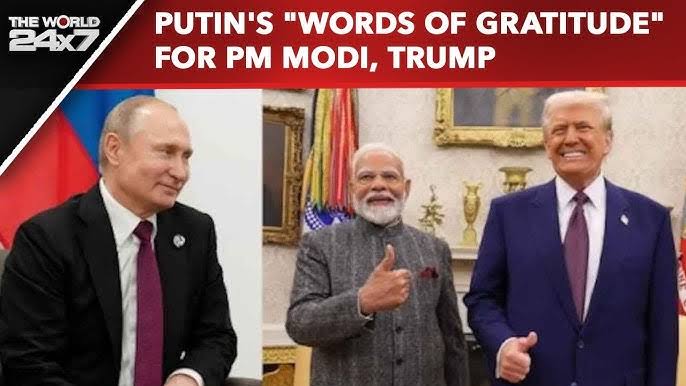
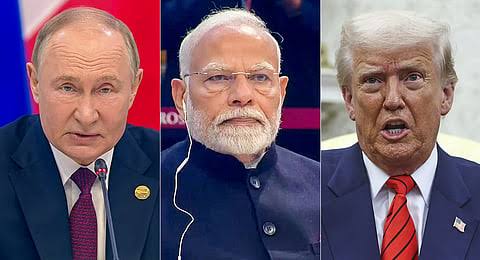
    President Vladimir Putin’s recent praise for Indian Prime Minister Narendra Modi marks a pivotal moment in India’s rise as a global power. Under Modi’s leadership, India has strengthened its role as a true Vishwa Guru—a global teacher and guiding force—while emerging as a key advocate for peace. His transformative foreign policy has significantly advanced India’s diplomatic standing, positioning the nation as a formidable force in international relations.

    Throughout the Ukraine-Russia conflict, Modi demonstrated a steadfast commitment to peace, resisting intense pressure from major global powers, including the United States and several European nations, to align with Ukraine. His independent stance was met with considerable pushback, both domestically and internationally.

    Well, critics accused him of undermining India’s democratic values by not taking a stronger stand against Russia, while Western allies sought to sway India toward their geopolitical agenda. Despite this, Modi remained resolute, advocating for dialogue and negotiation over military confrontation. His diplomatic efforts underscored India’s commitment to neutrality and peace, reinforcing its non-aligned stance in global conflicts.

    Three years later, U.S. President Donald Trump echoed a similar call for peace, urging an end to hostilities between Ukraine and Russia. His remarks reflected a growing realization among global leaders that prolonged warfare was unsustainable. The convergence of Modi’s early peace advocacy and Trump’s subsequent position played a crucial role in shaping diplomatic discourse surrounding the conflict. Ultimately, President Putin acknowledged Modi’s essential contribution to seeking a resolution, recognizing India’s growing influence on global affairs. Modi’s foreign policy has effectively positioned India as a Vishwa Guru, a nation capable of influencing even the world’s superpowers.

    India’s rise as a global leader is in stark contrast to its position in the early years following independence. When India gained freedom from British rule in 1947, its first Prime Minister, Pandit Jawaharlal Nehru, sought the United Nations’ intervention in the Kashmir dispute, a decision that many historians argue limited India’s strategic options in the region. Today, however, India no longer waits for global bodies to dictate terms; instead, major powers within the UN increasingly acknowledge and value India’s proactive engagement in global matters. Whether it is mediating between warring nations, championing climate change initiatives, or advocating for economic partnerships, India now commands a seat at the high table of international diplomacy.

    Under Modi, India’s foreign policy has undergone a fundamental transformation. His leadership has instilled a renewed sense of pride among Indians, reinforcing their country’s stature on the world stage. This shift is expected to have far-reaching consequences for India’s relationships with neighboring countries, particularly as they begin to recognize India’s true strategic and economic potential.

    India’s growing influence has not been without its detractors. Recent criticisms from the President of the Maldives appear to be diversionary tactics aimed at deflecting attention from his administration’s shortcomings. However, such criticisms are unlikely to hold ground, as India’s robust foreign policy continues to strengthen its alliances in the Indo-Pacific region. Similarly, long-standing tensions with Pakistan and Bangladesh may see a shift, with the potential for reduced Pakistani support for terrorism. A stable and assertive India could encourage its neighbors to reconsider their approach, fostering better diplomatic relations and regional stability.

    On the international stage, India’s firm stance is also compelling global organizations to rethink their habitual criticisms. Organizations that have frequently passed comments on India’s human rights record may find their narratives increasingly challenged by India’s undeniable diplomatic and economic progress. The era where India was seen as a passive participant in global affairs is over. Today, India is setting the agenda rather than merely responding to it.

    With its foreign policy now firmly on an irreversible path forward, India’s transformation into a global power is evident. Modi’s leadership has not only strengthened India’s strategic position but has also reaffirmed the country’s role as a champion of peace and diplomacy. As nations worldwide acknowledge India’s growing influence, it is clear that Modi’s vision of India as a Vishwa Guru is becoming a reality, solidifying the country’s place in the annals of global history.

  • Increasing attacks on Hindu pilgrims and temples in Andhra Pradesh, punish the culprits .

    Increasing attacks on Hindu pilgrims and temples in Andhra Pradesh, punish the culprits .

    Sri N. Chandrababu Naidu garu

     The Honourable Chief Minister 

     Govt of Andhra Pradesh 

    Sub   Request for urgent action on increasing incidencesof attacks 

         on Hindu pilgrims and temples in Andhra Pradesh, punish the culprits .

    Dear Sir ,

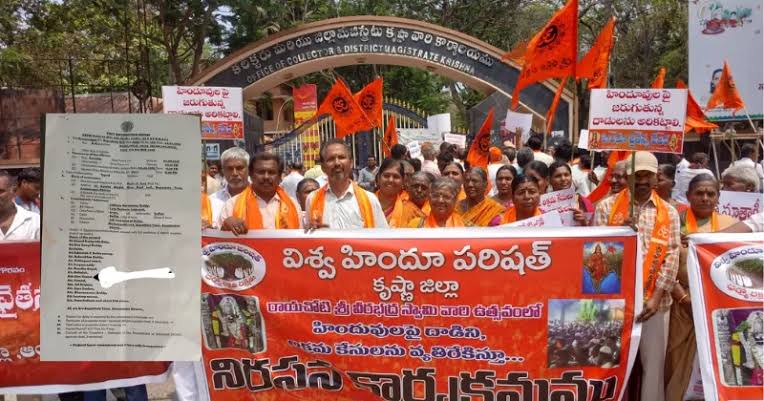
           I approach your goodself  as a concerned citizen and functionary of Vishwa Hindu Parishad to state that the increasing frequency of attacks on Hindu pilgrims and temples in Andhra Pradesh over the past decade is a significant concern that cannot be overlooked. These incidents, which have escalated in both number and intensity, suggest a troubling trend that poses a threat not only to the safety of individuals but also to the cultural and religious fabric of the region. The similarities in the patterns of these attacks in  a planned manner —targeting places of worship and religious gatherings—raise suspicions of a deeper, concealed conspiracy aimed the Hindu community and its festivals . 

    Recent incidents, particularly those targeting temples and pilgrims in locations such as Pedana in Krishna district, V. Kota in Chittoor district, and Roychotu in Anantapur district, are particularly alarming. These attacks have not only resulted in physical harm but have also instilled a sense of fear and insecurity among devotees.. The implications of such violence extend beyond immediate physical threats; they also foster an atmosphere of distrust and division within the society andhampers communal harmony .

     Moreover, there is a growing concern that radical activities are emerging in quiet coastal towns and the Rayalaseemaregion, areas that were previously considered peaceful. One of the 

    notable incident in 2017 involved a young man named Konakalla Subramanyam from a village near Machilipatnam, who was reportedly influenced to convert and subsequently sent on a terrorist mission to Syria to join ISIS. He was apprehended by the National Investigation Agency (NIA) at Hyderabad which  raises serious questions about the extent of radicalization and the potential for similar cases to arise. This incident may only represent the tip of the iceberg, indicating that there could be a larger network operating within the state, seeking to exploit vulnerable individuals for extremist purposes. In light of these developments, it is imperative for the central and state governments to take decisive action by initiating NIA investigations in Andhra Pradesh. Such investigations would not only help uncover the underlying networks responsible for these attacks but also serve as a deterrent against future incidents.  

       It is essential for the government to exercise rigorous vigilance  on activities taking place in places of worship, particularly those related to teaching and training. This vigilance should involve verifying the identities and credentials of both students and educators. Furthermore, it is important to monitor the lists of students, teachers, curricula, and funding sources linked to religious institutions. The illegal migrants from Bangladesh, Pakistan, and the Rohingyamay be taking sanctuary in these places of worship. It is feared that these people may do anything that could incite communal disturbances, which would increase tensions in a delicate situation. To ensure that houses of worship are peaceful havens rather than possible hotspots for conflict, the government must intervene proactively to address these problems.

    I appreciate your attention to this matter and your on-goingcommitment to the welfare of society by maintain communal harmony. I am confident that under your able  leadership the law and order will the top priority in  Governance especially for maintain communal harmony  . I request for considering this important issue urgently . I look forward to your positive response and the necessary actions that will follow. 

    Warm regards, 

    Dr.Buragadda Srinadh 

    President of Vishwa Hindu Parishad, Krishna District  

    Krishna District 

    9404396771

  • Congress political dip in khumb mela , to swim towards leftism or rightism confusion persists.

    Congress political dip in khumb mela , to swim towards leftism or rightism confusion persists.

    The Congress leaders sacred dip for sake publicity in the Kumbh Mela has highlighted a profound ideological dilemma that has been shaping its political strategy in recent years.

    This dilemma revolves around the party’s struggle to define its identity in a rapidly changing political landscape, where it finds itself oscillating between rightist and leftist ideologies.

    In the aftermath of the parliamentary elections, the Congress party gain emerged with a belief that its electoral success was largely due to the consolidation of non-Hindu voter bases, which included various minority communities and leftist -minded individuals. This perception was particularly influential for party leader Rahul Gandhi, who, feeling emboldened by this analysis, began to amplify the party’s anti-Hindu rhetoric.
    This shift was seen as an attempt to solidify the party’s position as a champion of secularism and minority rights, .

    . However, the party’s strategy faced a significant setback in the form of disappointing results in subsequent assembly elections. These outcomes served as a stark wake-up call for Congress, forcing it to confront the reality that its approach may not resonate with the broader electorate as it had hoped.
    The party’s leadership was left grappling with a sense of uncertainty regarding its ideological stance and future direction.

    This internal conflict has led to a critical examination of the party’s core values and its ability to connect with a diverse voter base. On one hand, there is a faction within Congress that advocates for a more leftist approach, emphasizing more like a minorities party .

    On the other hand, there are voices that argue for a more centrist or even right-leaning strategy, suggesting that the party should seek to engage with Hindu voters and address their concerns in a more inclusive manner. As the Congress party navigates this ideological crossroads, it faces the challenge of redefining its identity in a way that resonates with both its traditional support base and the broader electorate. The Kumbh Mela, as a significant cultural and religious event, symbolizes the complexities of Indian society and the need for political parties to engage with the diverse beliefs and values of the population. The Congress party’s participation in such events may be seen as an attempt to reclaim its relevance in a landscape increasingly dominated by identity politics. Ultimately, the Congress party’s future will depend on its ability to reconcile these conflicting ideologies and present a coherent vision that can unite its supporters while appealing to a wider audience. The ongoing struggle to find this balance will be crucial as the party seeks to regain its footing in a competitive

  • 1953 Madras division: Andhra’s Unhealed Wounds—Mr.Stalin Must Answer and Apologise

    1953 Revisited: Andhra’s Unhealed Wounds—Stalin Must Answer

    Dr. Buragadda Srinath

    The Telugu-speaking population of Andhra Pradesh carries a historical pain that should never be forgotten—the humiliation they endured in 1953 during the contentious division of the Madras state. This event marked a significant turning point in the region’s political landscape, as the Andhras were abruptly and unceremoniously forced out of Madras state, facing a strict deadline to vacate. The separation was not just an administrative reorganization; it was a deeply emotional and distressing experience for the Telugu-speaking community, who had long played an integral role in the development and cultural fabric of Madras. The sudden displacement left deep scars, creating a lasting sense of injustice that continues to resonate within the collective memory of the Andhras.

    The demand for a separate Andhra state was not a mere political manoeuvre; it was a struggle fuelled by cultural and linguistic identity, economic disparities, and the need for self-governance. The movement gained momentum with the sacrifices of leaders like Potti Sriramulu, who undertook a fast unto death, ultimately leading to the creation of Andhra state in 1953. However, the manner in which the Telugu people were forced to leave Madras city added insult to injury. They were given a strict deadline to vacate, leaving many families and businesses in turmoil. This bitter memory has persisted through generations, serving as a reminder of the discrimination and disregard they faced.

    In light of this historical context, it is imperative for Tamil Nadu’s Chief Minister, Mr. M.K. Stalin, to acknowledge this painful past and extend a formal apology to the people of Andhra Pradesh before advocating for unity among the southern states. Unity cannot be built on the foundation of unresolved historical injustices; it requires mutual respect and understanding. An official apology would not only serve as an act of reconciliation but also help foster genuine cooperation between the two states. Without addressing these grievances, any call for unity remains superficial and lacks the emotional and moral foundation necessary for true solidarity.

    Furthermore, it is essential for Andhra Pradesh to remain vigilant and not fall under the influence of Tamil interests that may seek to overshadow its own cultural and political identity. Over the years, there have been instances where Andhra’s interests have been sidelined in broader regional discussions, whether in matters of resource allocation, political representation, or economic collaborations. The rich heritage and aspirations of the Telugu people must be preserved and prioritized in any discussions of regional cooperation. True unity among the southern states can only be achieved through a balanced partnership where each state’s identity and interests are safeguarded.

    Mr. Stalin’s recent actions and rhetoric raise concerns about his commitment to national integration. His apparent alignment with foreign entities and his stance on regional issues suggest a potential divergence from the broader goals of unity and cooperation that are vital for the progress of all southern states. While regional alliances can be beneficial, they should not come at the cost of national integrity or the marginalization of any state’s interests. It is crucial for leaders to prioritize the well-being of their own communities while fostering a spirit of collaboration that respects the unique identities of each state.

    Hence, the Telugu-speaking population of Andhra Pradesh deserves recognition and respect for their historical experiences. An apology from Mr. Stalin would be a significant step towards reconciliation, and it is essential for Andhra Pradesh to assert its identity and interests in the face of external influences. The scars of the past cannot be ignored, but they can be addressed through sincere gestures of acknowledgment and respect. True unity among southern states will only be possible when there is a genuine commitment to addressing past grievances and fostering a relationship based on equality, understanding, and mutual respect.

    Mr. Stalin is advocating for a united front among seven states where the majority of the population adheres to Sanatana Dharma. However, he, along with his son and political allies, is firmly opposed to Sanatana Dharma. It is essential for him to clarify his party’s position on this matter.

  • Victory of BJP in rural Telangana, a prize of social engineering.

    The recent success of the Bharatiya Janata Party (BJP) in the Member of Legislative Council (MLC) elections in rural Telangana marks a noteworthy shift towards right-wing politics in a region traditionally dominated by regional parties. This electoral victory not only underscores the growing influence of the BJP in the state but also reflects a broader trend of political realignment among rural voters who may be increasingly drawn to the party’s nationalistic and development-oriented agenda. In light of this success, it is now essential for the BJP leadership to focus on consolidating and strengthening their rural support base. This involves not only maintaining the momentum gained from the recent elections but also addressing the unique needs and concerns of rural constituents. Engaging with local communities, understanding their challenges, and effectively communicating the party’s policies and initiatives will be crucial in fostering loyalty and trust among voters in these areas. Additionally, the BJP must work to counter any potential backlash from rival parties that may seek to reclaim their influence in rural regions. The election of Mr. Malka Komaraiah as a representative of the BJP is a significant milestone for the party in Telangana. His victory not only symbolizes the party’s growing foothold in the state but also serves as a testament to the effectiveness of the BJP’s outreach efforts in rural constituencies. Mr. Komaraiah’s background and connection to the local populace can be leveraged to further enhance the party’s image and credibility in the region. His role will be pivotal in articulating the party’s vision and policies, as well as in mobilizing grassroots support. As the BJP navigates this new political landscape, it will be important for the party to remain attuned to the evolving dynamics of rural politics in Telangana. By prioritizing rural development, addressing local issues, and fostering inclusive governance, the BJP can solidify its position as a formidable force in the state. The recent electoral success, coupled with strategic efforts to engage with rural voters, could pave the way for a sustained presence and influence in Telangana’s political arena.

  • DMK rejects Bharat ‘Hindi , embraces British English

    Dr Buragadda Srinadh

    The Dravida Munnetra Kazhagam (DMK) has long been associated with a distinct ideological stance that frequently positions it against certain aspects of Hindu culture and identity. This has fuelled the perception that the party harbours an anti-Hindu mindset—an allegation that raises critical questions about its motivations and broader implications for India’s cultural fabric.

    One of the most notable aspects of the DMK’s ideology is its rejection of Hindi as a national language. While this opposition is often framed as a defense of Tamil pride, it also challenges the linguistic unity of India, where Hindi serves as a common medium for millions. The DMK argues that Hindi imposition threatens Tamil linguistic heritage, yet this stance sometimes appears to dismiss the multicultural ethos of the nation. Critics argue that rather than fostering inclusivity, the DMK’s rigid stance could contribute to deeper regional divides.

    The DMK has also displayed a consistent skepticism towards Sanskrit, a language deeply intertwined with Hindu traditions. While Sanskrit is undeniably a key part of India’s historical and religious heritage, the party often frames it as a tool of Brahminical dominance. This approach raises concerns about whether the rejection is rooted in a genuine call for social reform or a broader disregard for Hindu cultural elements.

    The DMK has historically positioned itself against Brahmin hegemony, often portraying the community as symbols of oppression. While caste-based inequalities undeniably exist and need addressing, the party’s rhetoric sometimes appears to conflate Brahminism with Hinduism itself. Instead of fostering constructive dialogue, this approach risks alienating sections of society and undermining efforts towards social harmony.

    Interestingly, while the DMK resists Hindi and Sanskrit, it has been open to Western influences. The party’s adoption of foreign names, such as ‘Stalin,’ and its emphasis on English raises questions about its selective embrace of cultural influences. While globalization necessitates adaptation, the outright rejection of indigenous elements while celebrating foreign ones creates an ideological paradox. Does opposing Hindi and Sanskrit truly protect Tamil culture, or does it signal a broader departure from India’s indigenous heritage?

    The DMK’s persistent opposition to Hindi, Sanskrit, and elements of Hindu culture risks alienating a significant portion of the Indian population. While its advocacy for Tamil identity and social justice is valid, a more balanced approach could foster national integration rather than deepening cultural fault lines. If the party aims to position itself as a unifier rather than a divider, it must reconsider whether its current stance serves the larger Indian ethos or merely fuels polarization.

    True progress lies not in the rejection of certain traditions but in their inclusive evolution. Moving beyond an adversarial stance towards Hindi and Hinduism could pave the way for a more cohesive and culturally harmonious India.

  • Decay and Degeneration of Indian communist Party – Banyan tree became Bonsai plant

    Decay and Degeneration of Indian communist Party – Banyan tree became Bonsai plant

    The decline and deterioration of the Communist Party in India can be likened to a once-mighty banyan tree that has been reduced to a mere bonsai, stunted and constrained by its own anti-Hindu policies. This metaphor captures the essence of a party that, once a formidable force in Indian politics, has seen its influence wane significantly over the years. The roots of this decline can be traced to a series of misguided decisions and ideological stances that alienated a substantial portion of the electorate. At the heart of the party’s troubles is the exploitation of dedicated party members by self-serving leaders. These leaders, often more concerned with their personal ambitions than the collective goals of the party, have created an environment where loyalty is rewarded not with opportunity but with manipulation. This exploitation has fostered disillusionment among the rank and file, leading to a loss of morale and commitment to the party’s original ideals. As a result, the party has become increasingly disconnected from the very individuals who once championed its cause. Moreover, the political compromises made by party leaders in pursuit of personal gain have further weakened the party’s standing. In a bid to maintain power or secure positions of influence, these leaders have often sacrificed core principles, leading to a perception of hypocrisy and opportunism. This erosion of integrity has not only alienated party members but has also turned away potential supporters who once viewed the Communist Party as a viable alternative to the dominant political narratives in India. The party’s staunch opposition to industrial development and entrepreneurial initiatives has also played a significant role in its decline. By resisting the forces of modernization and economic growth, the Communist Party has positioned itself against the aspirations of a burgeoning middle class eager for progress and opportunity. This anti-development stance has ultimately led to their loss of power in West Bengal, a state that was once a bastion of Communist influence. The failure to adapt to changing economic realities has left the party out of touch with the needs and desires of the electorate. While the party did make efforts to reduce poverty, these initiatives were often overshadowed by an entrenched anti-capitalist ideology that failed to recognize the potential of market-driven solutions. Instead of fostering an environment conducive to economic growth and job creation, the party’s policies often perpetuated a cycle of dependency and stagnation. Many individuals who could have benefited from entrepreneurial opportunities found themselves trapped in a system that prioritized ideology over practical solutions, leaving them impoverished and disillusioned. As the party’s fortunes have declined, some members have increasingly resorted to extortion of money as a means of making huge money without hard work.